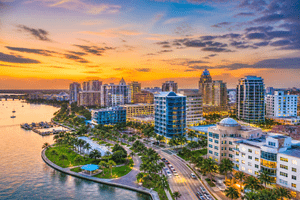
Pros and Cons of Living in Sarasota Florida: The Honest 2026 Guide
The Question Everyone Moving to Sarasota Actually Asks
"Is Sarasota really as good as everyone says?"
It's the question behind every YouTube search, every Reddit thread, every late-night Google session from someone sitting in Chicago or New York or Boston wondering whether to make the move to Florida's Gulf Coast. The answer — the honest one — is: yes, mostly. But there are things about Sarasota that the tourism board won't put in a brochure, and you deserve to know them before you sign a lease or make an offer.
This is the guide that gives you both sides. The reasons Sarasota makes people fall completely in love — and the reasons some of those same people wish someone had warned them.
THE PROS
1. The Beach Is Actually the Best in America — Not Marketing
Siesta Key Beach has been ranked #1 in the United States by TripAdvisor's Travelers' Choice Awards multiple times. Dr. Beach, Travel + Leisure, and USA Today have all said the same thing. And when you walk on it for the first time, you understand why. The sand is 99% pure quartz crystal — it stays cool in summer heat, squeaks under your feet, and photographs with a brilliance that looks digital even when it's real. The water is warm, clear, and shallow. This isn't hype. It's one of those rare cases where something genuinely earns every superlative.
2. The Cultural Scene Punches Dramatically Above Its Weight
Sarasota has a population of roughly 60,000 in the city proper. It has an opera company, a ballet, an internationally recognized orchestra, the John and Mable Ringling Museum of Art (which houses the largest collection of Peter Paul Rubens paintings in the world), the Van Wezel Performing Arts Hall, and one of Florida's most vibrant independent film and theater communities. For a city this size to have this cultural depth is genuinely extraordinary — and it's a major reason why the people who move here from larger cities are surprised by what they find.
3. No State Income Tax — and It Matters More Than You Think
Florida has no state income tax. For someone relocating from New York, California, Illinois, or Connecticut, the financial impact of this single fact can be substantial — potentially $10,000–$50,000 or more annually depending on income level. Combined with Sarasota's generally favorable tax environment (particularly with the Homestead Exemption for primary residents), the financial case for the move is often stronger than people initially calculate.
4. Proximity to Everything You Need
Sarasota's geography is almost absurdly convenient. From a well-located residence, you can reach:
America's #1 beach (Siesta Key): 20 minutes
Downtown dining and cultural institutions: 10–15 minutes
St. Armands Circle: 15 minutes
Sarasota Bradenton International Airport: 20 minutes
Tampa International Airport (more flight options): 60 minutes
World-class golf, tennis, and boating: 10 minutes
University Town Center luxury shopping: 15–20 minutes
The compactness of the city's amenity footprint is something residents cite consistently as one of its best qualities.
5. The Sarasota School District Is Genuinely Excellent
For families, the school quality question is often the deciding factor. Sarasota County Schools have maintained an A rating from the Florida Department of Education for more than 20 consecutive years — an extraordinary track record that reflects both the quality of the schools and the engaged community that supports them. Several Sarasota schools rank among the top in Florida.
6. Healthcare Is Top-Tier
Sarasota Memorial Hospital is nationally ranked for multiple specialties and is widely regarded as one of the finest healthcare systems in Florida. The hospital has expanded significantly in recent years with a new University Parkway campus, and the broader healthcare ecosystem in the area — specialists, medical offices, urgent care, wellness centers — is excellent. For retirees especially, this is not an afterthought; it's a core quality-of-life factor.
7. The Legacy Trail and Outdoor Life
The Legacy Trail — a 17-mile paved multi-use trail running from downtown Sarasota to Venice — is one of the finest recreational infrastructure investments in Southwest Florida. Cyclists, runners, and walkers use it daily. Combined with Sarasota's extensive park system, its kayak and paddleboard access throughout Sarasota Bay, its fishing and boating culture, and its year-round outdoor weather window (November–May is essentially perfect), the outdoor lifestyle here is genuinely exceptional.
THE CONS
1. Homeowner's Insurance: Prepare for Sticker Shock
This is the one that catches people most off guard. Florida homeowner's insurance has increased dramatically in recent years due to hurricane risk, litigation, and the statewide restructuring of the insurance market. In Sarasota, annual premiums ranging from $4,000 to $6,000 are common for a typical single-family home — and Gulf-front or bay-front properties can be considerably higher. When you add flood insurance (mandatory for mortgaged properties in flood zones, and much of Sarasota is in a flood zone), the combined annual cost can exceed $8,000–$12,000 for waterfront properties. This is real money that significantly affects the total cost of ownership and should be factored into any purchase decision.
2. Summer Heat and Humidity Are Serious
Florida summer is not a gentle season. From roughly June through September, temperatures regularly hit 90°F+ with humidity that makes the heat index feel like 100°F+. Afternoon thunderstorms are almost daily occurrences — typically arriving between 2–4 p.m. and clearing within an hour. Cooling bills of $250–$350 per month are not uncommon in summer. For people who love being outdoors, summer significantly compresses the window of comfortable outdoor activity to morning hours. This isn't a reason not to move here — most people adapt and even come to appreciate the summer quietness — but it's a genuine lifestyle adjustment if you're coming from a temperate climate.
3. Peak Season Transforms the City
November through April, Sarasota's population swells dramatically as snowbirds, seasonal residents, and tourists arrive. Traffic on US-41, restaurant wait times, grocery store lines, beach parking — everything becomes more competitive. This is the same season when the weather is most beautiful, so there's an unavoidable tradeoff. The beaches you enjoy in near-solitude in September will be packed in March. Most year-round residents develop strategies for navigating season, but it's an adjustment.
4. Red Tide: Florida's Recurring Environmental Reality
Red tide — blooms of a naturally occurring toxic algae called Karenia brevis — periodically affects Sarasota's Gulf waters and beaches. When it hits, the smell is unpleasant, swimming is inadvisable, and dead fish wash ashore. Red tide events are unpredictable in timing and duration — some last days, some last months. They are not caused by anything Sarasota does or doesn't do; they are a natural feature of the Gulf of Mexico ecosystem. Most years, Sarasota experiences minimal or no significant red tide impact. But in bad years, it can genuinely affect quality of life for months at a time. It's worth understanding before you move.
5. Real Estate Prices Have Grown Significantly
The pandemic-era surge in Sarasota real estate prices brought the market firmly into the expensive tier for Florida. While prices have moderated since the peak of 2021–2022, the entry point for purchasing a home in a desirable Sarasota neighborhood remains substantially higher than it was five years ago. The median home price in Sarasota County sits around $474,000–$685,000 depending on the specific segment, with desirable neighborhoods and waterfront properties significantly higher. Renters face similar pressure, with average rents for a 3-bedroom house in desirable areas running $2,500–$4,000+ monthly.
6. Traffic on US-41 and I-75
Sarasota's road infrastructure, particularly US-41 (Tamiami Trail) through the city core, was not designed for the volume of traffic it now carries. During season, certain intersections and corridors experience significant congestion. I-75, while generally functional, has bottlenecks particularly around the University Parkway interchange during peak hours. If your daily commute patterns or lifestyle depend on specific corridors, it's worth spending a week in Sarasota during February (peak season) to understand what traffic actually looks like before committing.
The Honest Bottom Line
Sarasota is as good as people say it is — and some things are genuinely harder than they sound in the brochure. The insurance costs are real. The summer heat is real. The red tide risk is real. The peak season transformation is real.
But here's the thing: the vast majority of people who move to Sarasota stay in Sarasota. The quality of life, the natural beauty, the cultural richness, the convenience, and the community hold people in ways that override the genuine inconveniences. If you go in with eyes open — having modeled the real insurance costs, having visited in July not just February, having understood what peak season looks and feels like — you're setting yourself up for one of the best lifestyle decisions you'll ever make.
FAQ: Is Sarasota Florida a good place to live? Yes — consistently ranked among Florida's top cities for quality of life, healthcare, schools, beaches, and culture. The main adjustments are insurance costs, summer heat, and peak season crowding. What is the biggest downside of living in Sarasota? Homeowner's insurance costs are the most frequently cited financial downside. The combination of property insurance and flood insurance for waterfront properties can add $8,000–$12,000+ annually to ownership costs. Is Sarasota better than Naples? Both are excellent Gulf Coast cities. Sarasota offers more cultural amenities and a larger, more urban feel; Naples is quieter, more formal, and has slightly different beach access. The right choice depends on your priorities.